Introduction
Christian leadership is in trouble everywhere we look. The global headlines are mirrored in too many local contexts. Should we be in despair? I think not.
Flawed as it is, human leadership is the only kind God left us with. It will not do, by the way, to claim ‘leadership’ is not in the Bible. Paul urged those with the gift of leadership to “do it diligently” (Romans 12.8).
Leadership is in Scripture. It is not perfect. Not even in the first century. If it had been, we would barely have any of the epistles. Most of them correct significant errors in congregations promulgated by people of influence (aka ‘leaders’). The only perfect leader was Jesus. Therefore, we will take a brief look at four of the qualities that made him an outstanding leader. However, before getting to him, let’s consider what leadership is and some common leadership styles.
What is leadership?
Influence. It can be used for good or ill.
How do you know if you are a leader? As someone once quipped, “Look behind you. Is anyone following? If so, you are a leader.” That observation speaks not of your competency or health as a leader. But it might indicate you have the gift of leadership.
The difference between healthy and unhealthy leadership is the extent to which we adopt the character of Christ and how that informs our approach to leadership. In other words, the way we pay attention to God, and use our leadership gift to serve those whom God has put in our lives.
How do we get from the raw gift to mature Christlike leadership? Fundamentally, it is dependent on humility.
- Will we open ourselves up to God’s Spirit refining us?[^1]
- Will we allow others to provide helpful perspectives on our character?[^2]
- Will we welcome feedback on how we are leading? [^3]
Note: Is God trying to get your attention via any of the channels mentioned above?
Leading in weakness
Perhaps even more scarily, will we make ourselves vulnerable enough to lead in and through our weaknesses?
There’s a tension here. Perhaps even a paradox.
Our gifts are important. They matter. We must use them. It is a great blessing to a congregation when the members with leadership gifts work for God’s glory, the edification of the members, and in service to those seeking God. When they do that skilfully, all the better.
Yet, living by faith means we do not depend on our gifts, skills, or track record. Consider the following.
- Moses protested that he wasn’t a good speaker (Exodus 4.10), but God gave him Aaron and promised His presence.
- Gideon thought of himself as the least in his family (Judges 6.15), yet God used him to deliver Israel.
- Jeremiah said he was too young to speak (Jeremiah 1.6–7), but God reassured him that He would put words in his mouth.
- The apostles were mostly unimpressive people (Acts 4.13), but they were empowered by the Spirit to proclaim the gospel.
Paul sums up the issue:
“But God chose the foolish things of the world to shame the wise; God chose the weak things of the world to shame the strong” (1 Corinthians 1.27).
Leadership in strength
On the other hand, consider these examples of strength:
- Aaron was called because he was a gifted speaker (Exodus 4.14-16).
- Apollos was a gifted teacher when he was further instructed by Priscilla and Aquila (Acts 18.24).
- Paul himself was a gifted rhetorician and highly educated in the Scriptures (Acts 17.22-23 as an example, and Acts 22.3 for his training).[^4]
It looks rather as if God calls the equipped, and equips the called.
What does that mean? It means that you should not allow your weaknesses to disqualify you from offering your leadership gift in God’s service. And, if you are already competent in technical aspects of leadership, invite God to refine your heart such that you utilise your gift in a Christlike manner.
How many kinds of leaders are there?
Some leadership styles or approaches are more suitable in certain contexts than others. I wonder if you are familiar with the six leadership styles researched by Daniel Goleman and colleagues? You may want to click the links below to learn more. I have found their research invaluable in navigating the ever-shifting sands of church leadership.
Styles that tend to create dissonance – but can be useful:
Styles that tend to create resonance:
- Visionary leadership style
- Democratic leadership style
- Coaching leadership style
- Affiliative leadership style
You may have benefited from these styles used in the proper context or way, and you may have been harmed when they were shoe-horned into a leadership situation where it suited the leader, but not those being led. It is essential to grow in self-awareness so that we do not use the wrong approach in the wrong situation.
It rather looks to me that Jesus employed all these styles. You might like to look for examples of each of them in the gospels. Bottom line – Jesus varied his leadership style to better meet the needs of the people he was leading. He did not, however, compromise his godly character traits in doing so. Therein lies the leadership maturity trajectory for any human leader.
How do you and I grow in discernment to know when to vary a leadership style, acquire the skills to deploy that style effectively, and maintain a posture of ever-growing spiritual maturity in the process?
Now, let’s get to Jesus and his character.
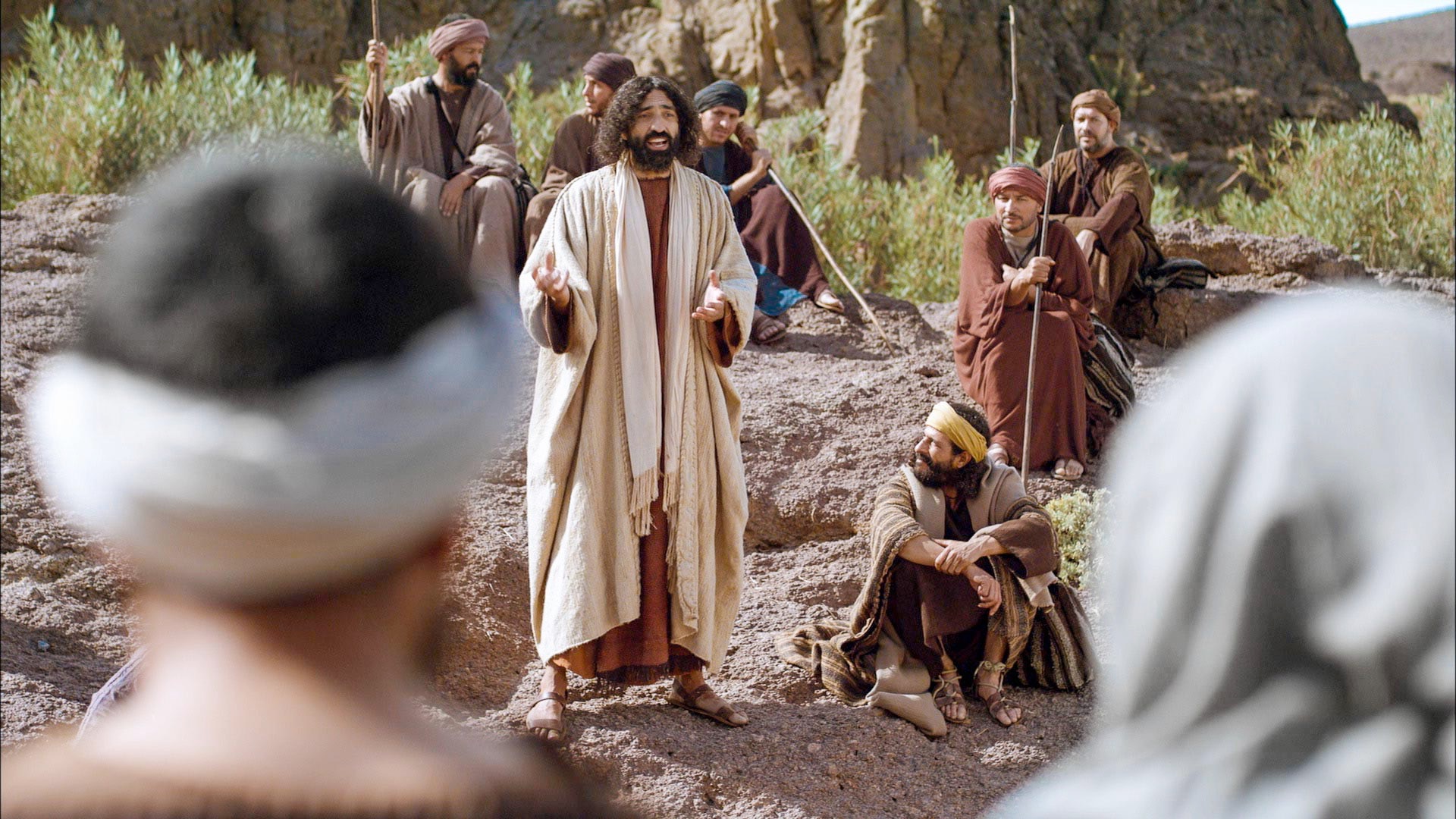
How did Jesus lead?
I am offering a woefully brief summary of only four of the qualities that made him the consummate, effective God-honouring leader that he was. However, we have to start somewhere.
- God dependent, John 5.19. Prayerful – Mark 1.35. Loved the Word – Luke 2.46. Not seeking ‘power’ – John 18.37. Faith-full.
- Servant heart. He loved the people God brought into his life practically – Matthew 14.16. He was interruptible, noticing the Spirit at work – Mark 5.22. He was available to all, but not a doormat. He was more interested in people than programmes. Leadership culture, not leadership rules, was his priority.
- Courageous faith and trust in God. Obedient to God. His Father’s agenda was his agenda. The way of the cross. Matthew 16.21, John 4.34.
- Integrity. He had no favourites. “Whom neither force nor fawning can unpinne.” (George Herbert, Constancie) John 2.23-25, Luke 13.31-32. Tough skin, soft heart. What you saw was what you got.
I suggest you take these principles, attitudes, and character aspects of Jesus and review them in the gospels. It makes for an excellent study of leadership. I invite you to share any additional features you discover with me.
Reflection Questions
- How do we honour God by using the gifts he has given us, but at the same time live by faith, not depending on them?
- What is your predominant leadership style? Is it appropriate for your current context?
- Which channels has God provided for developing your leadership gift? Are you embracing them?
- What channels for developing Christlike character has God provided? Are you embracing them?
- What do you most admire in the way Jesus led, and why?
Conclusion
Jesus led with authority—not as an authoritarian—and not because of talent, personality, or force. He led because He fully embodied the four qualities listed above.
In our local congregations, let us petition God to raise up people who, while never able to embody these qualities as completely as Jesus, are not living in contradiction to them and who genuinely desire to grow in them.
What are your thoughts? I’d love to hear them.
Your brother, Malcolm
[^1]: It looks rather as if that is what is happening when Jesus is in the wilderness (Luke 4, Matthew 4).
[^2]: Study the developing relationship between Jesus and Peter as an example
[^3]: Moses responds well to Jethro in Exodus 18.
[^4]: See this note for an example of his rhetorical skill: [[Paul’s Use of Classical Rhetorical Techniques in Acts 17]], https://www.malcolmcox.org/pauls-use-of-classical-rhetorical-techniques-in-acts-17/