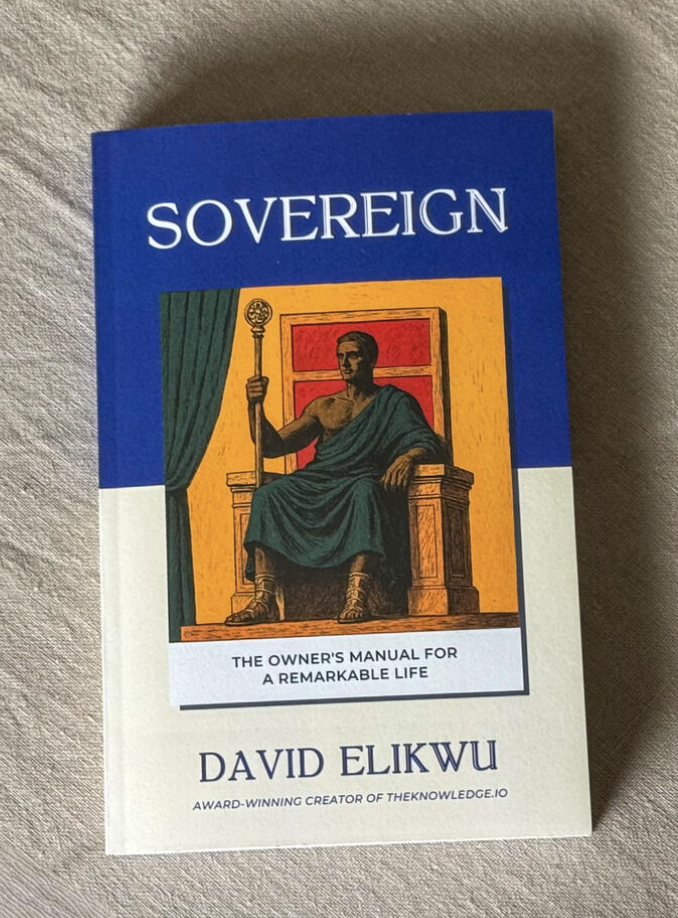
Based on thoughts from, Sovereign, by David Elikwu. Chapter: Finding your speed.
Introduction
Qoheleth tells us:
“Two are better than one, because they have a good reward for their toil. For if they fall, one will lift up his fellow.” (Ecclesiastes 4.9–10)
A modern-day writer and son of a friend of mine, David Elikwu, in his book Sovereign and the chapter “Finding Your Speed”, echoes the same idea. David claims that if we want to grow into all we can be, we need not two, but three distinct groups of people in our lives.
Do you think, as I do, that he is on to something? And, can we find parallels in Scripture?
1. Those Behind Us
First, we need people who are slightly behind us—those we can support, encourage, and teach. Not from a place of superiority, or structured hierarchy, but from the benefit of relevant experience. We’ve walked a little further down the road, and we can help make the path clearer for them.
You may remember Paul calling the Corinthians to “Be imitators of me, as I am of Christ.” (1 Corinthians 11.1). To the congregation in Philippi he urged, “What you have learned and received and heard and seen in me—practice these things.” (Philippians 4.9)
2. Those Beside Us
Second, we need people who are roughly at our level—peers who understand the season we’re in because they’re living it too. They offer honesty, shared burdens, and the relief of not having to explain ourselves.
The New Testament emphasises this kind of mutual support by telling us to “Bear one another’s burdens, and so fulfil the law of Christ.” (Galatians 6:2) These relationships protect us from isolation and discouragement.
Faith was never meant to be practised alone. Even the strongest believers need companions who walk with them, shoulder to shoulder, arm in arm.
3. Those Ahead of Us
Third, we need people who are ahead of us. They expand our vision of what is possible. They draw us forward by example, wisdom, and spiritual maturity.
The writer of Hebrews urges believers to, “Remember your leaders, those who spoke to you the word of God. Consider the outcome of their way of life, and imitate their faith.” (Hebrews 13.7)
Seeing faith lived out over time helps us persevere through our own struggles and keep perspective.
Paul, Barnabas, and Timothy
David’s framework reminded me: Every Christian needs a Paul, a Barnabas, and a Timothy.
Paul: Someone Ahead of You
Paul represents those ahead of us in faith and experience. Timothy benefited not only from Paul’s teaching but from close walking and working with him. Paul wrote of Timothy:
“I have no one like him, who will be genuinely concerned for your welfare… You know Timothy’s proven worth, how as a son with a father he has served with me in the gospel.” (Philippians 2.20–22)
Timothy grew because he walked closely with someone further along in faith, character, and the development of skills and gifts.
Barnabas: Someone Beside You
Barnabas represents those who walk beside us—encouragers who believe in us when others struggle to do so. When the early church was understandably nervous about Paul after his baptism into Christ, Scripture says:
“But Barnabas took him and brought him to the apostles and declared to them how on the road he had seen the Lord.” (Acts 9.27)
Barnabas didn’t just speak encouragement; he stood with Paul. Scripture later describes him as “a good man, full of the Holy Spirit and of faith” (Acts 11:24). Discipleship is lonely without a Barnabas.
Timothy: Someone Behind You
Timothy represents those coming after us—those we intentionally invest in. Paul urged him: “Let no one despise you for your youth, but set the believers an example in speech, in conduct, in love, in faith, in purity.” (1 Timothy 4.12)
Timothy was not merely receiving wisdom; he was being shaped to pass it on: “What you have heard from me… entrust to faithful men, who will be able to teach others also.” (2 Timothy 2:2)
This is generational discipleship, modelled clearly in Scripture.
Roles We All Share
It is important to remember that these roles are not fixed identities reserved for a select few. Everyone needs a Paul, a Barnabas, and a Timothy. And just as importantly, everyone can be a Paul, a Barnabas, and a Timothy. Including you. At different stages of life, and as God puts different people in our lives, we rotate through these roles—learning, walking alongside, and investing in others.
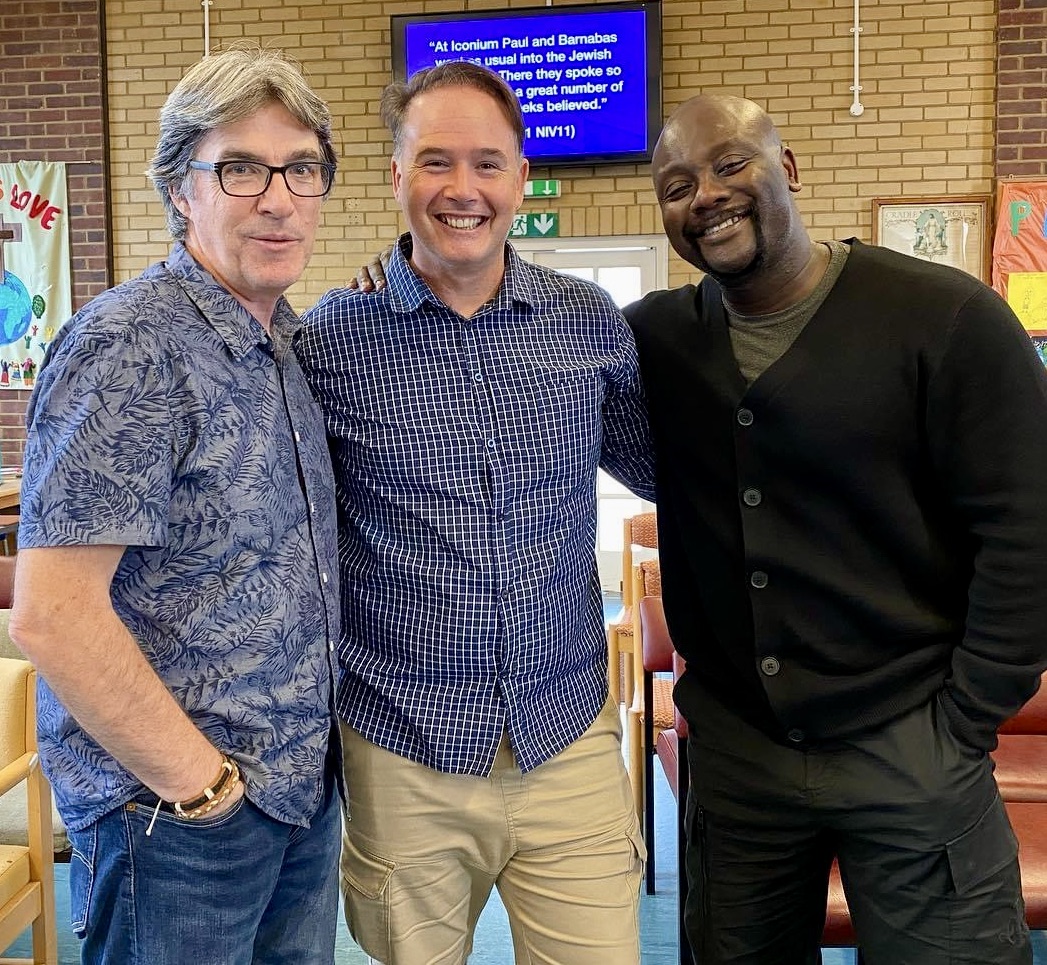
The three men in the picture are old friends who, at different times and contexts have been a Paul, Barnabas or Timothy to me – and I to them. Charlie Hynes, Andy Boakye and Paul Smith have deeply enriched my life and faith over many years.
Which roles are being called into focus for you at the moment? Either as a recipient or as a giver? Who are your Charlies, Andys or Pauls?
Conclusion – Growth Is Relational
David’s framework and the biblical examples remind us that sustainable and transformational growth is relational. It’s not about speed, ambition, or discipline. It’s about who we’re walking with, who we’re learning from, and who we’re helping along the way. If your spiritual growth feels stalled, the issue may not be your effort. It may be your companions.
“Let us consider how to stir up one another to love and good works, not neglecting to meet together.” (Hebrews 10:24–25)
Not every season requires more work. Some seasons require more helpful people around us.
What are your thoughts? I’d love to hear them.
Your brother, Malcolm